The Evolving Landscape of Smartphones in 2025: Features, Trends, and Top Picks
So, 2025 is shaping up to be a pretty interesting year for smartphones. It feels like they're getting smarter, faster, and just generally more capable. We're talking about phones that can actually learn how you use them, cameras that take pictures like a pro, and batteries that just keep going. Plus, things like charging speeds and how we connect to the internet are getting a serious upgrade. It’s a lot to take in, but it basically means our phones are becoming even more central to our lives, and they're getting better at handling everything we throw at them.
Key Takeaways
-
Expect smartphones in 2025 to be packed with AI that learns your habits to make things run smoother and last longer.
-
Camera technology is getting a big boost, with AI helping take better photos and videos, especially in tricky lighting or when zooming.
-
Battery life and charging are improving, with smarter power management and faster wired and wireless charging options becoming standard.
-
Connectivity is getting a major overhaul with faster 5G and the introduction of Wi-Fi 7, making everything from streaming to gaming more reliable.
-
Security features like fingerprint sensors and facial recognition are getting quicker and more accurate, alongside hardware-level protection for your data.
1. Advanced AI Integration
Okay, so AI in phones isn't exactly new, but in 2025, it's really starting to feel like a whole different ballgame. We're not just talking about a slightly smarter voice assistant anymore. These phones are actually learning how you use them and making things smoother behind the scenes. Think about it: your phone anticipating what app you'll open next, or adjusting its power usage based on your daily routine. It's pretty wild.
This smart stuff is happening thanks to dedicated AI chips, often called co-processors. They're like tiny brains just for AI tasks, handling things like making your photos look better, understanding your voice commands more accurately, and generally making the phone run more efficiently. This means your phone can do more complex tasks right on the device, without needing to send data to the cloud all the time. That's good for privacy and speed.
Here’s a quick look at what AI is doing:
-
Smarter Cameras: AI is doing a lot of the heavy lifting for photography. It recognizes scenes – like a sunset or a pet – and tweaks settings automatically. It also helps with things like making zoomed-in shots clearer and improving low-light photos.
-
Better Performance: AI helps manage the phone's resources, so when you're jumping between apps or playing a demanding game, everything stays snappy. No more annoying lag.
-
Personalized Experience: Over time, your phone will start to feel like it truly belongs to you, adapting to your habits and preferences.
It's not just about raw power anymore; it's about how intelligently that power is used. This shift means phones are becoming less like tools and more like helpful companions. You can check out some of the top AI smartphones for 2025 to see these advancements in action.
2. Revolutionary Cameras
Forget just megapixels, folks. In 2025, smartphone cameras are getting seriously smart, thanks to a big push in AI. It's like having a pro photographer living inside your phone. These cameras can now figure out what you're shooting – whether it's a pet, a sunset, or a dimly lit restaurant – and adjust everything automatically to make the photo look its best. This means less fiddling with settings and more great shots, right out of the camera.
We're seeing some pretty cool tech here:
-
Computational Photography: This is where the AI really shines. It takes multiple shots and stitches them together, fixing blur, boosting detail, and making colors pop. Think of it as digital magic happening instantly.
-
AI Night Mode: Remember those grainy, dark photos from years ago? Those are pretty much history. New phones can capture surprisingly bright and clear pictures even when it's almost pitch black.
-
AI Zoom: Zooming in used to mean losing a lot of quality. Now, AI helps reconstruct the image, giving you clearer, more detailed zoomed-in shots than ever before. It's not quite optical zoom, but it's getting very close.
-
Better Video: Shaky video footage is also becoming a thing of the past. Advanced stabilization means your videos will look smooth and professional, even if you're walking or moving around.
The focus has shifted from just packing in more lenses to making the existing ones work smarter. AI is the secret sauce, helping phones understand scenes and subjects to produce images that used to require dedicated cameras and a lot of editing.
It's pretty wild how far mobile photography has come. You can get some truly stunning shots without needing to be a camera expert. For anyone who loves snapping pictures on the go, this is a huge leap forward. Check out the latest smartphone camera tech to see what I mean.
3. Intelligent Battery Management
Okay, so let's talk about batteries. It feels like we're always chasing that last percentage point, right? Well, 2025 is shaping up to be a big year for how our phones manage their power. We're seeing a real shift towards smarter battery tech that goes beyond just slapping in a bigger cell.
The big story here is AI learning how you actually use your phone. Instead of just a generic power-saving mode, your phone is getting way better at figuring out when you're actively using it, when it's just sitting in your pocket, and what apps are real battery hogs. This means it can adjust power consumption on the fly, making sure you get more juice when you need it most. It's like having a tiny, super-efficient manager inside your phone, constantly optimizing things.
Here's a quick rundown of what's making a difference:
-
Adaptive Power Allocation: AI predicts your usage patterns to prioritize power for active apps and reduce it for background processes.
-
Optimized Charging Cycles: Phones are learning your charging habits to slow down charging overnight, which is way better for the battery's long-term health.
-
User-Defined Limits: Some phones are letting you set your own charging thresholds, like stopping at 80%, to further extend battery lifespan.
This intelligent approach means you're not just getting a phone that lasts all day, but one that's designed to keep performing well for years. It's a pretty neat trick, honestly, and a big step up from just hoping for the best. It’s a tangible benefit, representing some of the smartest mobile technology of 2025. You can find more about these advancements in AI phones.
It's not just about having a massive battery anymore. The real innovation is in how that power is managed. Think of it like a smart thermostat for your phone's energy – it learns, adapts, and keeps things running smoothly without you even noticing.
This focus on intelligent battery management is a welcome change, making sure our devices are as reliable as they are powerful.
4. Fast Charging Standards
Remember when charging your phone overnight was the only option? Those days are pretty much gone. By 2025, we're seeing some seriously fast charging speeds become the norm, even on mid-range phones, let alone the flagships. Getting a significant charge in just a few minutes is no longer a futuristic dream, it's a reality.
We're talking about wired charging that can easily push past 100W. This means you could potentially get a full charge in less time than it takes to grab a coffee. Wireless charging is catching up too, with speeds hitting 50W and beyond on some devices. Plus, reverse wireless charging is becoming more common, so you can top up your earbuds or smartwatch just by placing them on the back of your phone.
Here's a quick look at what to expect:
-
Wired Charging: Expect speeds well over 100W on many premium devices, aiming for a full charge in under 30 minutes.
-
Wireless Charging: Speeds of 50W or higher will be available, making cable-free charging much more practical.
-
Reverse Wireless Charging: This feature, allowing your phone to charge other devices, will be more widespread.
The push for faster charging isn't just about convenience; it's also about making sure your phone is ready to go when you are, minimizing downtime throughout your busy day. It's a big deal for people who are always on the move.
It's pretty wild how far we've come. Just a few years ago, 20W felt speedy. Now, manufacturers are really pushing the limits to get you powered up as quickly as possible.
5. Next-Generation Connectivity
Okay, so let's talk about how our phones are going to connect to everything in 2025. It's not just about getting online anymore; it's about how fast, how reliably, and how intelligently we can connect.
The big story is that 5G is really hitting its stride. We're moving beyond just having 5G on the box; networks are getting denser, especially in cities, and phones are getting better at using all the different kinds of 5G signals available. This means faster downloads, smoother streaming, and less lag when you're gaming or on a video call.
But it's not just cellular. Wi-Fi is getting a serious upgrade too. We're talking about Wi-Fi 7 becoming more common. Think of it like upgrading from a highway to a superhighway – way more data can flow, and it's much less crowded, which is great for busy households or public hotspots.
Then there's this thing called Ultra-Wideband, or UWB. You might have heard of it. It's like a super precise radar for your phone. It lets devices know exactly where they are in relation to each other. This is what makes things like digital car keys work so well, or helps you find lost items with pinpoint accuracy. It also opens up some cool possibilities for augmented reality.
Here's a quick rundown of what to expect:
-
5G Everywhere: Better coverage and faster speeds, including both the wide-reaching Sub-6 GHz and the super-speedy mmWave bands.
-
Wi-Fi 7 Ready: Significantly faster home and public Wi-Fi with less interference.
-
UWB Precision: Accurate spatial awareness for new kinds of interactions and device finding.
It’s easy to think of connectivity as just a background thing, but in 2025, it's becoming a core feature that directly impacts how we use our phones for everything from work to play. The improvements are pretty significant.
6. Wi-Fi 7 and UWB Technologies
Beyond just cellular, the way our phones connect to everything else is getting a serious upgrade in 2025. We're talking about Wi-Fi 7, which is a pretty big deal for anyone who's ever felt that frustrating lag when trying to download something big or stream a high-res video. This new standard promises speeds that make current Wi-Fi look slow, with much better handling of crowded networks. Think of it like upgrading from a single-lane road to a superhighway – more data can flow, and it flows faster and more smoothly.
Then there's Ultra-Wideband, or UWB. You might not have heard of it much yet, but it's quietly becoming a really useful piece of tech. UWB is all about precise location tracking. It's what allows your phone to know exactly where another UWB-enabled device is, down to the inch. This opens up some cool possibilities:
-
Digital Car Keys: Imagine just walking up to your car, and it unlocks because your phone knows precisely where you are. No more fumbling for keys.
-
Device Finding: Lost your earbuds or wallet? UWB can guide you right to them with much greater accuracy than Bluetooth alone.
-
Augmented Reality: This tech can make AR experiences feel more real by accurately mapping your surroundings and the position of virtual objects within them.
These technologies aren't just for tech enthusiasts; they're about making everyday interactions smoother and more intuitive. Having Wi-Fi 7 means your home network and public hotspots will perform better, and UWB adds a layer of spatial awareness that's genuinely practical. It's all part of making our phones more capable and integrated into our lives. For a look at how these advancements are shaping mobile connectivity, check out the details on Wi-Fi 7's capabilities.
The combination of faster wireless internet and precise location tech means our phones are becoming even more central to how we interact with the physical world and manage our digital lives. It's less about just browsing and more about doing.
7. Enhanced Biometrics
Okay, so biometrics on our phones are getting pretty wild, right? It’s not just about unlocking your phone with your face or fingerprint anymore. By 2025, we're seeing a big jump in how secure and convenient these systems are.
The days of simple fingerprint scanners are fading, replaced by more sophisticated and multi-layered authentication methods. Think about it: your phone knows it's really you, not just some random person trying to get in. This is huge for keeping your personal stuff safe.
Here’s what’s changing:
-
Under-Display Fingerprint Sensors: These are getting faster and more accurate. They can cover a larger area of the screen, making it way easier to unlock your phone without looking. Some even work when your finger is a little wet.
-
Advanced Facial Recognition: Forget those basic 2D scans. We're talking 3D mapping of your face, so it’s much harder to fool with a photo. This tech is also getting better in low light.
-
Behavioral Biometrics: This is the really cool, almost invisible stuff. Your phone can learn how you type, how you hold it, and even how you swipe. It uses this info in the background to make sure it's still you, adding an extra layer of security without you even noticing.
-
Iris Scanning: While not on every phone, some high-end devices are bringing back iris scanning. It’s super precise and can be used for quick, secure logins.
These biometric upgrades aren't just for show. They're about making our digital lives more secure without adding extra steps. Imagine paying for something with just a glance or a quick touch, knowing it's completely safe because your phone verified it was you in multiple ways. It’s about that blend of security and ease that we all want.
So, yeah, your phone is becoming a lot smarter about who it lets in, and that’s a good thing for all of us.
8. Hardware-Based Security
When we talk about keeping our phones safe in 2025, it's not just about passwords anymore. A big part of that is hardware-based security. Think of it like having a tiny, super-secure vault built right into your phone.
This dedicated hardware is designed to protect your most sensitive information, like fingerprints, facial scans, and payment details, keeping them separate from the main operating system. This makes it way harder for malware or hackers to get to them, even if they manage to mess with the software. It's a pretty big deal for privacy.
Here's a look at what that means:
-
Secure Enclaves: These are isolated processing areas within the phone's main chip. They handle all the really sensitive stuff, like storing your fingerprint data or processing payment information, without letting anything else on the phone access it.
-
Hardware Encryption: Your data, like photos, messages, and files, can be automatically encrypted using keys stored in this secure hardware. This means even if someone got the physical phone, the data would be unreadable without the right keys.
-
Trusted Execution Environments (TEEs): These create secure spaces where specific applications can run without interference from the rest of the phone's software. This is great for things like secure banking apps or digital rights management.
The move towards hardware-level security is a response to increasingly sophisticated threats. Instead of relying solely on software defenses, manufacturers are building security right into the silicon, creating a more robust foundation for protecting personal data. It’s a proactive approach to digital safety.
So, while you might not see this hardware directly, it's working behind the scenes to make sure your personal information stays personal. It's a quiet but really important part of what makes a modern smartphone secure.
9. Secure Mobile Payments
Making payments with your phone is practically second nature now, right? In 2025, this is only getting smoother and, more importantly, safer. We're talking about transactions that are not just quick but also built with serious security in mind. Your phone is becoming your wallet, and the tech behind it is pretty impressive.
The core of secure mobile payments relies on a multi-layered approach, combining hardware and software to keep your financial information locked down. Think of it like a digital vault for your credit card details.
Here's a look at what makes it all work:
-
NFC Technology: Near Field Communication is the standard for contactless payments. It allows your phone to communicate with payment terminals over a very short distance, making it hard for anyone to intercept the data.
-
Tokenization: Instead of your actual card number being stored or transmitted, a unique digital token is used for each transaction. This means even if the token were somehow compromised, your real card details remain safe.
-
Biometric Authentication: Whether it's your fingerprint or your face, using your unique biological traits to authorize a payment adds a significant layer of security. It's much harder for someone else to mimic your fingerprint than to guess a PIN.
-
Secure Element (SE): Many phones now have a dedicated, tamper-resistant chip that stores your payment information separately from the main operating system. This hardware-based security is designed to protect sensitive data from malware and unauthorized access.
The convenience of tapping your phone to pay is undeniable, but the real story is the sophisticated security infrastructure working behind the scenes. It's designed to protect you from fraud and ensure that your financial data stays private, even as payment methods become more integrated into our daily lives.
These features work together to create a payment experience that's not only convenient but also incredibly secure, giving you peace of mind every time you tap to pay.
10. Immersive Display Technology
Get ready for screens that really pull you in. In 2025, smartphone displays are getting seriously good, making everything from scrolling through social media to watching movies a much better experience. We're talking about screens that are brighter, show more colors, and can change their refresh rate on the fly. This means smoother scrolling and less battery drain when you don't need all that speed.
These displays are also getting sharper. While QHD+ resolution is becoming standard for premium phones, the real magic is in how they handle light and motion. Peak brightness levels are climbing, making outdoor viewing a breeze, and adaptive refresh rates up to 144Hz mean animations and games look incredibly fluid. It's not just about specs, though; it's about how it all comes together for your eyes.
The push for better displays isn't just about making things look pretty. It's about creating a more natural and responsive interaction between you and your device. Think about how much time we spend looking at our phones – making that experience as pleasant and efficient as possible is a big deal.
Here's a quick look at what to expect:
-
Higher Peak Brightness: Screens can get much brighter, making them easier to see outside.
-
Adaptive Refresh Rates: Displays adjust their refresh speed automatically, saving battery.
-
Improved Color Accuracy: Colors look more true-to-life, which is great for photos and videos.
-
Reduced Bezels: More screen, less phone – the bezels are shrinking even further.
For those really into visuals, especially for things like augmented reality, the resolution race is on. We're seeing discussions around displays that can hit extremely high pixel densities, aiming for around 5000 pixels per inch [0980]. This level of detail could make digital content feel almost indistinguishable from reality on your phone.
11. Foldable and Rollable Displays
Okay, so foldable phones. They're still a thing, and honestly, they're getting pretty good. Remember when they first came out and felt like fragile prototypes? Well, that's changing. We're seeing more durable hinges and screens that don't crease as much. It's like they're finally figuring out how to make them practical for everyday use.
The book-style foldable is still the king of this category. It's just a really neat way to get a bigger screen when you need it, without carrying around a tablet. You can actually multitask on these things now, running a couple of apps side-by-side without it feeling like a total mess. It's great for when you're on the go and want to get more done, or just want a bigger canvas for watching videos.
Here's a quick look at what makes them better:
-
Improved Durability: Hinge mechanisms are stronger, and screen protection is getting better. We're even seeing some with decent water and dust resistance ratings, which is a big deal for a foldable.
-
Reduced Creasing: That annoying line down the middle of the screen? It's becoming less noticeable on newer models.
-
Better Aspect Ratios: Cover screens are getting wider, making them feel more like a regular phone when closed, and the inner displays are optimized for multitasking.
Rollable displays are still pretty much in the experimental phase, but they're out there. Think of a phone that can expand its screen size with a slide or a roll. It's a bit niche right now, but it shows where things might be headed. It's exciting to see how these flexible screens will evolve, potentially changing how we interact with our devices entirely. Foldable smartphone shipments are projected to increase by 14% year-over-year in 2025, showing that people are definitely interested in these new form factors foldable smartphones.
While the price tag on these devices can still be pretty steep, the technology is maturing. You're getting more functionality and a more refined experience than ever before. It's not just about having a cool gadget anymore; it's about having a device that can genuinely adapt to different needs throughout your day.
12. 5G Network Evolution
So, 5G. It’s been around for a bit, but in 2025, it’s really starting to feel like the standard, not just some fancy new thing. We’re talking about more than just faster downloads, though that’s definitely part of it. The networks are getting denser, meaning you’re more likely to have a solid connection, even when you’re out and about in less populated areas. This expansion is a big deal for how we use our phones daily.
Think about it: more reliable video calls, smoother streaming of high-definition content, and quicker access to cloud services. It’s all about making your phone feel more responsive and capable. Plus, with the ongoing rollout of 5G-Advanced (5G-A), we're seeing even more sophisticated capabilities emerge, with over 50 large-scale deployments expected by the end of the year. This means better performance and new possibilities for applications we haven't even thought of yet.
Here’s a quick rundown of what’s happening:
-
Broader Coverage: Sub-6 GHz 5G is becoming the norm, giving you a good signal in more places.
-
Speed Boosts: mmWave 5G is still around for those super-fast bursts in busy spots like stadiums or downtown areas.
-
Smarter Connections: Technologies like 5G Carrier Aggregation are helping phones combine different 5G bands to get the best possible speed and stability.
The evolution of 5G isn't just about raw speed; it's about creating a more consistent and capable network that supports a wider range of devices and applications. This improved infrastructure is what allows for those next-level mobile experiences we're starting to see.
This push for better 5G is also paving the way for other cool tech. It’s the foundation that lets things like Wi-Fi 7 and Ultra-Wideband (UWB) really shine, making your phone a more powerful hub for everything you do. It’s pretty wild how much the network itself impacts what our phones can actually do. You can check out the latest on 5G network expansion here.
13. Sustainable Design
It's getting harder to ignore the environmental impact of our gadgets, and 2025 is shaping up to be a big year for phones that are kinder to the planet. Manufacturers are really starting to push the envelope here, using more recycled materials in their construction. Think plastics made from old bottles, metals reclaimed from discarded electronics, and even more sustainable packaging that cuts down on waste. This shift isn't just about looking good; it's about making a real difference.
Beyond just materials, repairability is also a growing focus. We're seeing phones designed to be taken apart more easily, meaning you might be able to swap out a dead battery or a cracked screen yourself without needing a specialized technician. This not only saves you money but also extends the life of your device, keeping it out of landfills for longer.
Here's a quick look at what to expect:
-
Increased use of recycled metals and plastics: Components like aluminum frames and plastic casings are increasingly incorporating post-consumer recycled content.
-
Modular design elements: Some phones might feature more easily replaceable parts, like batteries and cameras.
-
Reduced packaging waste: Expect simpler, more eco-friendly packaging made from recycled or biodegradable materials.
-
Longer software support: Manufacturers are committing to providing software updates for more years, reducing the need for frequent upgrades.
The push for sustainability in smartphones is becoming a major selling point. Consumers are more aware than ever about their environmental footprint, and companies that prioritize eco-friendly practices are likely to gain a loyal following. It's a win-win: better for the planet and better for the brand's image.
14. Enhanced Haptics
Remember when phone vibrations were just a buzz? Well, things are getting way more interesting. In 2025, smartphones are packing much more sophisticated haptic feedback systems. We're talking about tiny, precise motors that can create a whole range of sensations, not just a simple shake.
Think about it: instead of just a generic buzz when you tap a button, you might feel a subtle click, like pressing a physical switch. Or when you're scrolling through a list, you could get a little bump for each item. It makes interacting with your phone feel more real, more tactile. It’s like the phone is actually responding to your touch in a more meaningful way.
This isn't just for fun, either. These advanced haptics can actually help you use your phone better. For instance:
-
Navigation: Feeling distinct vibrations for different directions or turns when using maps.
-
Gaming: Experiencing more realistic feedback for in-game actions, like the recoil of a weapon or the rumble of an engine.
-
Accessibility: Providing clearer tactile cues for users with visual impairments.
-
Typing: Getting subtle confirmation for each key press, which can actually speed up your typing and reduce errors.
The goal is to make digital interactions feel more physical and intuitive. It's a subtle change, but once you get used to it, going back to a phone with basic vibrations feels pretty bland.
These advanced haptic engines are becoming more common, moving beyond just a simple vibration motor to more complex systems that can generate a wider array of tactile sensations. This allows for more nuanced feedback, making the user interface feel more responsive and engaging. It's about adding another layer of sensory input to our digital lives.
So, while you might not always notice it consciously, the improved haptics in 2025 phones are working to make your phone feel more alive and connected to your actions. It’s a small detail that makes a surprisingly big difference in the overall user experience.
15. Premium Build Quality
When you pick up a smartphone in 2025, you'll notice something different. Manufacturers are really focusing on how these devices feel in your hand. We're talking about materials that feel solid, not flimsy. Think polished metal frames, tough glass that resists scratches, and designs that just feel well put together. It’s not just about looking good; it’s about lasting.
Here’s what’s making the cut for premium builds:
-
Materials: Expect more ceramic, titanium, and advanced composites. These aren't just for show; they add durability and a nice weight.
-
Finishes: Matte finishes are popular for resisting fingerprints, and some phones are getting special coatings that make them feel grippier.
-
Durability Ratings: Look for IP68 water and dust resistance as standard on most high-end models. Some are even pushing for higher ratings.
-
Ergonomics: Phones are getting more comfortable to hold, with curved edges and balanced weight distribution.
The days of phones feeling like cheap plastic toys are pretty much over for the top models.
It’s a noticeable shift. You can feel the difference when you hold a phone that’s been crafted with care. It’s like the difference between a mass-produced item and something made with a bit more attention to detail. This focus on build quality means your phone should not only look good but also hold up better to the everyday bumps and scrapes.
The push for premium materials and robust construction isn't just about aesthetics; it's about creating devices that feel substantial and reliable, giving users confidence in their investment and the longevity of their technology.
16. Uncompromising Performance
When we talk about top-tier smartphones in 2025, performance isn't just a buzzword; it's the bedrock of the entire experience. These devices are built to handle absolutely anything you throw at them, without breaking a sweat. We're seeing processors built on incredibly small manufacturing nodes, like 3nm, which means they pack more power while using less energy. This translates directly into apps opening instantly, games running at their highest settings without a stutter, and juggling multiple demanding applications feeling completely effortless.
Think about it: you can be editing a 4K video, downloading a large file, and hopping between video calls, all at the same time. That's the kind of smooth operation we're talking about. It's not just about raw speed, though. It's about how intelligently the phone manages its resources, making sure that power is there when you need it, but also conserving energy when you don't. This efficiency is key to making sure that all that power doesn't just drain your battery in a few hours.
Here's a quick look at what defines top performance in 2025:
-
Advanced Chipsets: Latest generation processors (often 3nm) offering significant gains in both speed and power efficiency.
-
Ample RAM: Generous amounts of fast RAM (like LPDDR5X) allowing for smooth multitasking and quick app switching.
-
Optimized Software: Operating systems and apps are fine-tuned to take full advantage of the hardware, reducing lag and improving responsiveness.
-
Efficient Cooling: Improved thermal management systems prevent overheating during intensive tasks, maintaining peak performance.
The days of phones slowing down after a year or two are fading fast. Manufacturers are focusing on sustained performance, meaning your device should feel just as snappy months or even years after you buy it. This commitment to longevity means you're getting a device that truly keeps up with your life, no matter how demanding it gets.
17. Exceptional Camera Systems
Forget just megapixels, folks. In 2025, smartphone cameras are basically tiny, super-smart photography studios you carry around. The real magic is happening behind the scenes with AI. It's not just about taking a picture anymore; it's about the phone intelligently figuring out what you're shooting and making it look its absolute best. Think of it like having a professional photographer in your pocket, but without the awkward small talk.
These cameras are getting seriously good at handling tricky situations. Low light? No problem. Fast-moving subjects? They're locked on. And that zoom? It's not just digital stretching anymore; AI is actually reconstructing details to keep things sharp, even from a distance. It’s pretty wild how much better photos are getting, even on phones that aren't the absolute top-tier.
Here's a quick look at what you can expect:
-
Scene Recognition: The phone automatically adjusts settings for landscapes, portraits, food shots, you name it.
-
Computational Photography: Advanced processing for better colors, less noise, and sharper details, all happening instantly.
-
AI Zoom: Clearer zoomed-in shots thanks to smart image reconstruction.
-
Video Stabilization: Super smooth video, even if you're walking or in a bumpy car.
The days of fiddling with manual camera settings are fading fast. Most users will find that the automatic AI modes on these new phones produce results that are more than good enough for sharing online or just keeping for memories. It’s all about making great photos accessible to everyone.
Some phones are even packing multiple telephoto lenses, giving you serious optical zoom capabilities. We're seeing setups with 200MP main sensors paired with ultrawide and telephoto lenses that offer 3x and 5x optical zoom, and then that AI magic kicks in for even longer ranges. It’s a big leap from just a few years ago.
18. All-Day Battery Life
Remember the days when you'd frantically search for a charger by late afternoon? Yeah, those days are pretty much over for most of us. By 2025, phones are really getting good at lasting.
It’s not just about cramming bigger batteries in, though that’s part of it. Manufacturers are getting smarter about how the phone uses power. Think about how your phone manages background apps, screen brightness, and even how the processor kicks in only when it needs to. It’s a whole system working together.
Here’s a quick look at what’s making batteries last:
-
Smarter Power Management: Software is getting really good at figuring out when you're using your phone and when you're not, cutting down power use when idle.
-
Efficient Processors: New chips are designed to do more with less energy. They’re faster, sure, but they’re also more power-conscious.
-
Adaptive Displays: Screens can now adjust their refresh rates and brightness more intelligently, saving juice when you're just scrolling or reading.
-
Optimized Background Tasks: Apps are being better controlled so they don't drain your battery when you're not actively using them.
We're seeing phones that can easily go from morning to night, even with heavy use. This means less anxiety about finding an outlet and more freedom to just use your phone.
Some phones are even boasting over 30 hours of video playback, which is pretty wild when you think about it. It’s a big deal for anyone who travels a lot or just forgets to charge their phone overnight. This focus on endurance is a huge win for everyday users.
19. Robust Security Features
When you're looking at phones in 2025, security is a big deal. It's not just about keeping your photos private anymore; it's about protecting everything from your bank details to your personal identity. Manufacturers are really stepping up their game to make sure your phone is a fortress.
We're seeing a few key areas where things are getting better:
-
Better Biometrics: Fingerprint scanners are faster and more accurate, often built right into the screen. Facial recognition is also getting smarter, able to tell the difference between you and a photo more reliably.
-
Hardware Security: Think of this like a tiny, super-secure vault built right into the phone's chip. It's designed to keep your most sensitive information, like passwords and payment data, extra safe, even if the rest of the phone is compromised.
-
Secure Payments: Using your phone to pay for things is becoming super common, and it needs to be safe. New phones are making these transactions even more secure, so you can tap and pay without worrying.
It's not just about the fancy tech, though. Software updates are also playing a bigger role. Companies are promising longer support for their devices, meaning you'll get security patches for more years. This is a big change because it means your phone stays protected against new threats for longer, which is pretty important if you plan on keeping it for a while.
These features work together to create a layered defense. It’s like having multiple locks on your door, each one making it harder for unwanted guests to get in. So, whether you're a business person handling sensitive data or just someone who values their privacy, the security on these new phones should give you some peace of mind.
20. US Market Trends
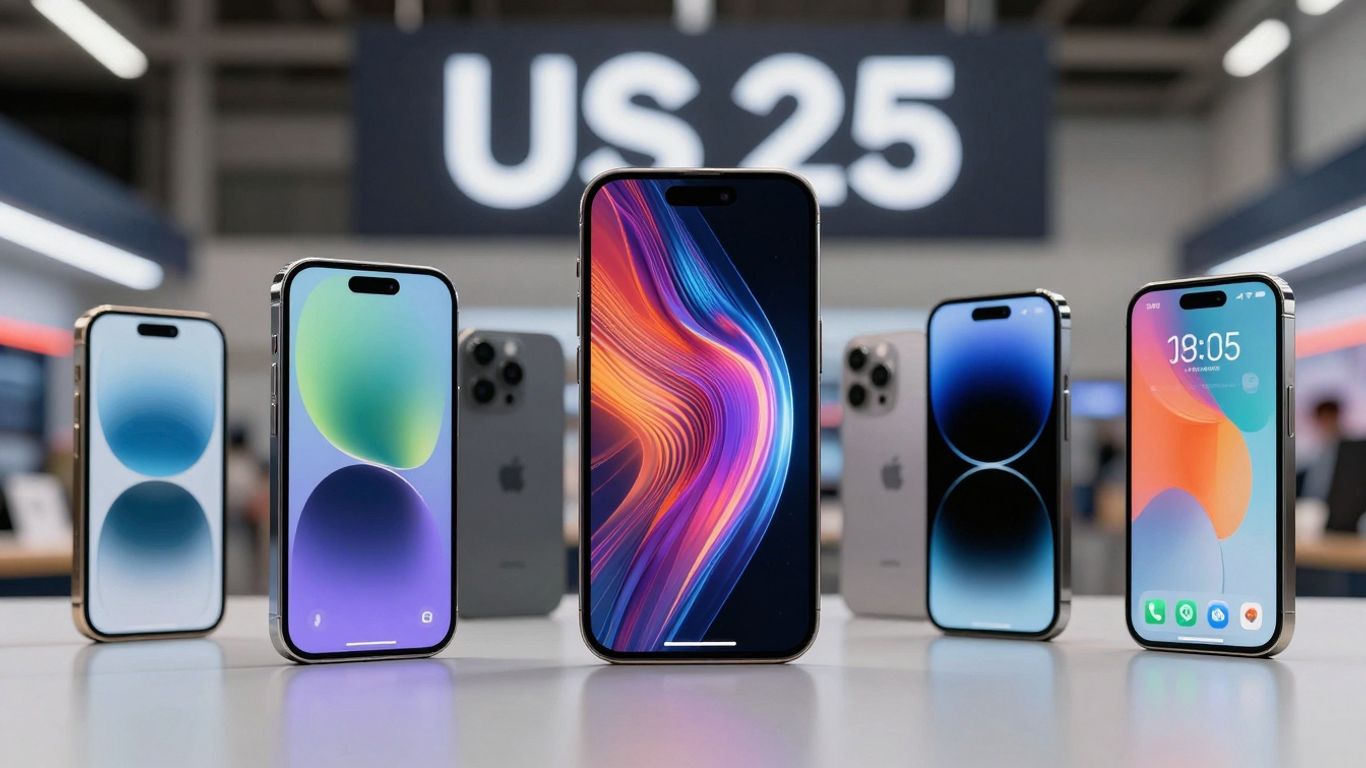
Alright, let's talk about what's happening with smartphones here in the US. It feels like everyone's holding onto their phones a bit longer these days, right? People are definitely spending more on the fancy, high-end models, but they also expect them to keep working well for years. This means manufacturers really need to focus on making phones that are built tough and get software updates for a good while.
When you look at who's buying what, it's still a pretty tight race between the big players. Apple and Google have their own strong followings, and it's not just about the phone itself. It's about all the other stuff that works with it – the watches, the earbuds, the smart home gadgets. If you're already deep into one of these systems, switching can be a real hassle, so people tend to stick with what they know.
Here's a quick look at how folks are spending:
-
Premium Segment Dominance: A significant chunk of the market is focused on flagship devices, with consumers willing to pay more for top-tier features and performance.
-
Lengthening Upgrade Cycles: Users are keeping their phones for an average of 3 years or more, pushing manufacturers to prioritize durability and long-term software support.
-
Ecosystem Lock-in: Strong brand loyalty exists within established ecosystems (like Apple's iOS or Google's Android services), influencing purchasing decisions.
The US smartphone market in 2025 is characterized by a consumer base that values longevity and integrated experiences. While innovation continues to drive new purchases, the underlying trend is a demand for devices that offer sustained value and fit seamlessly into their digital lives.
We're also seeing a lot more interest in phones that can do more, especially with AI becoming a bigger deal. It's not just about having a faster processor; it's about how that processor helps with everyday tasks, from taking better pictures to managing your battery life more smartly. It's a complex picture, but it seems like people want phones that are reliable, smart, and part of a bigger connected world.
21. Consumer Spending Habits
When it comes to buying new smartphones in 2025, people are definitely thinking more about what they're getting for their money. It's not just about having the latest gadget anymore; folks want devices that are going to last and keep up with their needs for a good while. This means we're seeing a shift towards spending more on phones that offer solid build quality, longer software support, and features that genuinely make life easier, whether for work or just staying connected.
The days of upgrading every year just because are fading; people are holding onto their phones longer and expecting more from them.
Here's a quick look at what's influencing these choices:
-
Durability and Longevity: Consumers are looking for phones built to withstand daily wear and tear, with better materials and more robust designs. They want a device that won't need replacing after a year or two.
-
Value Over Hype: While cutting-edge features are still attractive, the focus is shifting to how those features translate into real-world benefits. Is that fancy new camera going to improve your photos significantly, or is it just a spec bump?
-
Ecosystem Lock-in: For many, the decision is heavily influenced by the ecosystem they're already invested in. If you're deep into Apple's services or Google's suite, sticking with that brand often makes the most sense, even if other phones offer slightly better hardware.
-
Performance for the Long Haul: People expect their phones to remain fast and responsive over time. This means processors that can handle demanding apps and sufficient RAM are becoming more important than ever.
The market is seeing a trend where consumers are more discerning with their purchases. They're willing to invest in premium devices, but they expect that investment to pay off in terms of sustained performance, reliable software updates, and features that genuinely improve their daily lives. It's less about impulse buys and more about considered decisions.
This means manufacturers really need to focus on delivering a complete package – not just flashy specs, but a device that feels like a smart, long-term investment for the average person.
22. The Ecosystem Advantage
It’s not just about the phone itself anymore, is it? By 2025, the real draw for many, especially in the US market, is how well a phone plays with all your other gadgets. Think about it: your phone, your watch, your tablet, maybe even your laptop – they all need to talk to each other without a fuss. This is where the big players really shine.
The companies that have built out these connected webs of devices are making it really hard for people to switch.
We're talking about things like instantly sharing files between devices, using your phone as a trackpad for your computer, or having your smartwatch buzz with notifications that started on your phone. It’s all about making your digital life feel like one big, smooth operation.
Here’s a quick look at how the main contenders stack up:
-
Apple: They’ve been doing this for ages. Their iPhone, iPad, Mac, and Apple Watch all work together like a well-oiled machine. Features like iMessage and the way apps sync across everything are huge reasons people stick with them.
-
Google (Pixel): Google is pushing hard with its Pixel phones, focusing on how well they integrate with Google services. Think about Google Photos, Assistant, and the whole Android system. They’re building a strong connection, especially with their AI smarts.
-
Samsung: They have a wide range of devices too, from phones and watches to TVs and appliances. Their goal is to make all these Samsung products work together, giving users a lot of options.
Choosing a phone in 2025 often means picking a whole digital world to live in. It’s less about just the phone and more about the convenience of having everything work together, saving you time and hassle throughout the day.
23. Advanced AI Co-processors
You know, it's not just the main processor doing all the heavy lifting anymore. Phones in 2025 are packing these specialized little chips, called AI co-processors, and they're a pretty big deal. These dedicated units are specifically designed to handle all the smart stuff, freeing up the main brain of your phone for other tasks. Think of it like having a personal assistant just for AI-related jobs.
What do they actually do? Well, they're great at running machine learning tasks right on your device. This means things like your camera getting smarter, voice commands being understood better, and even your text predictions becoming more accurate, all without needing to send data to the cloud. They also play a big role in managing power, figuring out how to best use your battery throughout the day based on how you're using your phone. Plus, they help make your phone feel more personal, learning your habits and adjusting how it works to suit you.
These specialized chips are becoming a standard feature in high-end devices, allowing for quicker processing of AI functions and improving overall device efficiency and user experience.
So, what does this mean for you? It means your phone can do more complex AI tasks faster and more efficiently. Your photos might get better processing, your apps could run smoother, and your battery might just last a little bit longer because these co-processors are so good at their specific jobs. It's a behind-the-scenes upgrade that makes a noticeable difference in how your phone performs day-to-day.
24. Computational Photography
Forget just megapixels, because in 2025, your smartphone camera is basically a tiny supercomputer for photos. Computational photography is where the real magic happens now. It's all about the software, the smart algorithms working behind the scenes to make your pictures look way better than they probably should.
Think about it: your phone is taking multiple shots, sometimes even before you press the button, and then it's stitching them all together. It's doing things like:
-
Smart HDR: Blending different exposures to get details in both the bright sky and the dark shadows. No more blown-out highlights or muddy darks.
-
Noise Reduction: Cleaning up grainy photos, especially in low light, so your night shots actually look good.
-
Detail Enhancement: Sharpening edges and bringing out textures without making things look fake.
-
Scene Recognition: The phone figures out if you're shooting a person, a pet, food, or a landscape, and adjusts its processing accordingly. It's like having a pro photographer inside your phone.
This means you can get shots that used to require expensive gear and a lot of skill, right from your pocket.
The days of just pointing and shooting are long gone. Now, your phone is actively thinking about how to capture the best possible image, using AI to make split-second decisions that improve everything from focus to color balance. It's a huge leap from just having a better sensor; it's about smarter processing.
Even zoom shots are getting a serious upgrade. Instead of just cropping and blowing up a picture (which usually looks terrible), phones are using AI to intelligently reconstruct details, giving you clearer zoomed-in images than ever before. It's pretty wild when you think about it – your phone is essentially creating detail that wasn't explicitly captured.
25. AI Zoom and More
Okay, so we've talked a lot about AI in phones, but let's get specific about cameras. You know how sometimes you zoom in on a photo, and it just gets all blurry and pixelated? Well, AI is changing that game. AI Zoom is getting seriously good, using smart software to actually reconstruct details instead of just stretching them out. This means you can zoom in further on that concert or sporting event and still see what's going on without everything looking like a watercolor painting.
But it's not just about zooming. AI is working behind the scenes on all sorts of camera tricks:
-
Scene Recognition: Your phone can now tell if you're shooting a sunset, a pet, or a plate of food, and it adjusts the settings automatically. No more fiddling with modes.
-
Object Removal: Spotted something distracting in your perfect shot? Some phones can now intelligently remove it, filling in the background like it was never there.
-
Personalized Styles: AI can learn your preferred editing look and apply it to new photos, making your whole gallery have a consistent vibe.
-
Better Video: Think smoother video, even if you're walking around. AI helps stabilize shaky footage, making it look more professional.
It feels like phones are finally catching up to what we actually want to do with our cameras – take great pictures easily. It's less about the raw specs and more about what the software can do with them.
The days of just counting megapixels are pretty much over. Now, it's all about how the phone's brain, powered by AI, can make sense of the light and colors it sees. This means better photos in tricky lighting, sharper focus on moving subjects, and even creative effects that used to require a computer and a lot of skill.
Wrapping It Up
So, looking at everything, it's pretty clear that phones in 2025 are going to be seriously impressive. We're talking about devices that learn how you use them, charge up super fast, and take pictures that look like they came from a pro camera. Plus, they're getting tougher and smarter about keeping your stuff safe. Whether you're all about the Apple ecosystem or a Google fan, there's something new and exciting coming. It feels like we're moving past just having a phone to having a really capable little computer that fits in your pocket, and honestly, that's pretty cool.
Frequently Asked Questions
Will new phones in 2025 cost a lot more than today's phones?
While the newest, fanciest phones might still be pricey, the jump in cost isn't expected to be huge. Companies are trying to offer more for your money with better features that last longer. You might even find older top models at better prices when new ones come out.
How much memory (RAM) will phones have in 2025?
Most high-end phones in 2025 will come with at least 12GB of memory. If you want the absolute best for super demanding apps and doing many things at once, some will offer 16GB or even 24GB.
Are foldable phones tough enough to use every day by 2025?
Foldable phones have gotten much stronger. While you still need to be a little more careful than with a normal phone, the ones in 2025 will have better hinges and tougher folding screens. They'll be a much better choice for daily use.
How will AI make my phone's camera pictures better, not just brighter?
AI will do much more than just brighten photos. It will help suggest how to frame your shots, automatically remove unwanted things from pictures, make videos super smooth like a pro camera, and even learn how you like your photos edited to do it for you.
Can my 2025 phone charge really fast?
Yes! Wired charging will be super speedy, with many phones getting a full charge in less than 30 minutes, often over 100 watts. Wireless charging will also get faster, with some phones supporting 50 watts or more.
What's new with phone screens in 2025?
Screens will be brighter and use less power. They'll also be able to change how smoothly they refresh, going up to 144 times per second for super smooth scrolling and gaming. We might even see more foldable and rollable screens becoming available.